
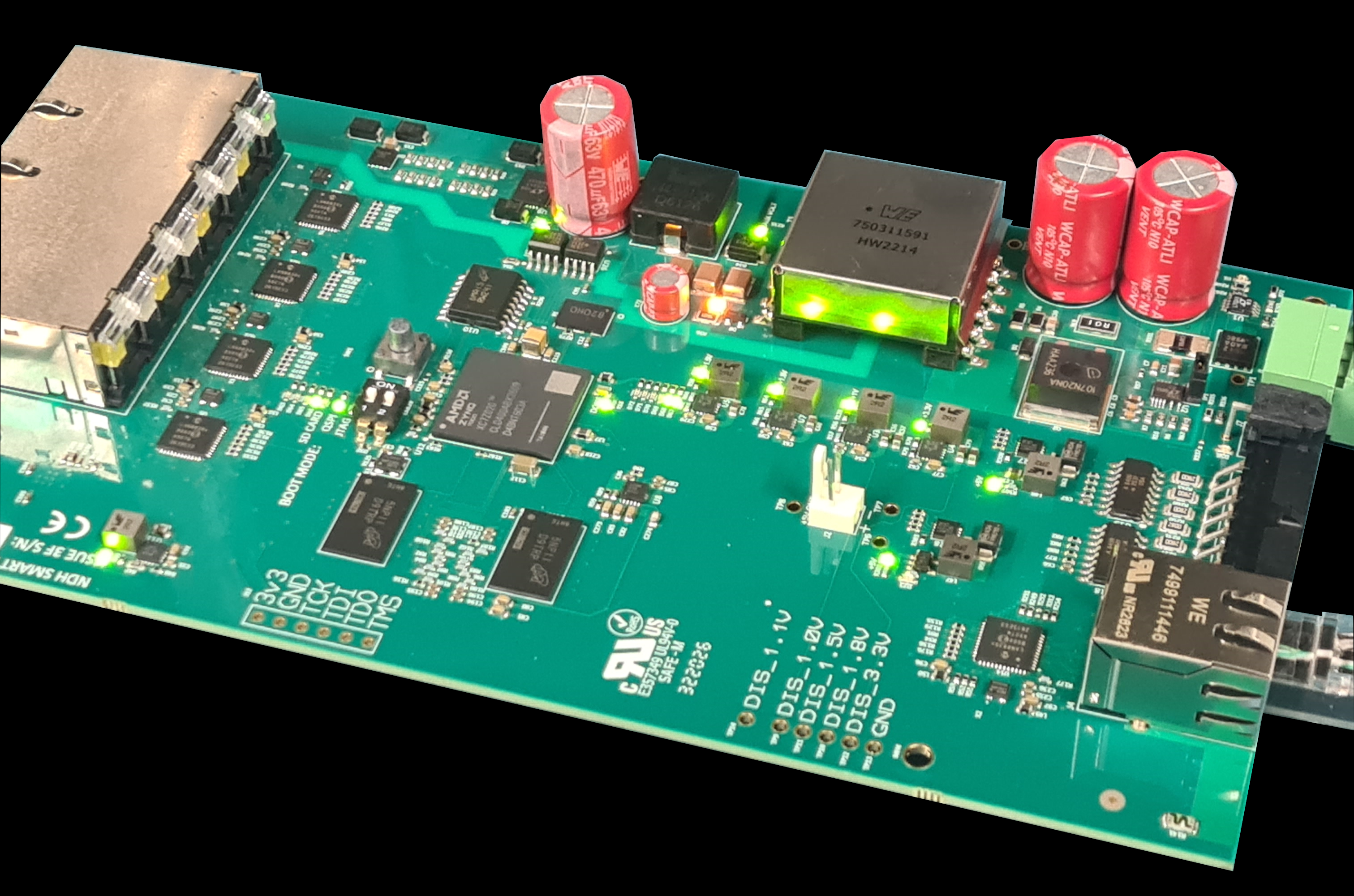
Northern Design House selects Chromatec to assemble and test its latest production batch of SmartSwitch cards.
Article written byStuart Sommerville▼
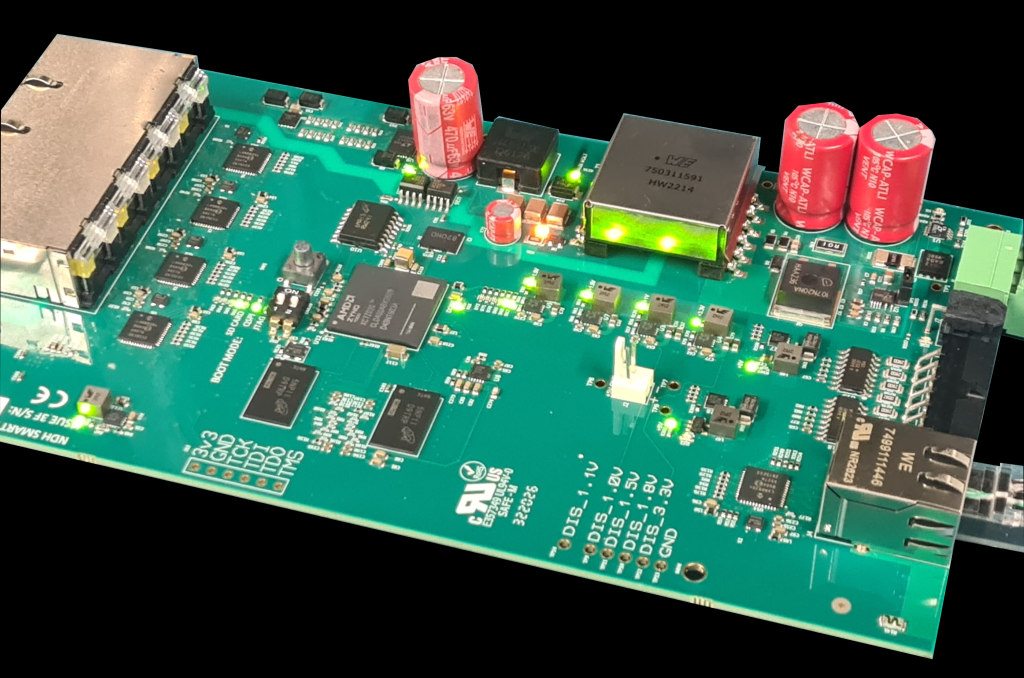
SmartSwitch
When Richard North contacted Chromatec to assemble a second, larger batch of 60 SmartSwitch boards, we were delighted to take on the project. Having assembled a smaller batch the previous year, we were already familiar with the design. This time, however, Chromatec would take responsibility for the complete production process, from component procurement and PCB assembly through to inspection, testing and programming.
Northern Design House specialises in providing high-quality FPGA solutions for industrial applications, with expertise spanning telecommunications, television and scientific applications.
SmartSwitch is a highly configurable 4+1 industrial Power over Ethernet (PoE) switch. The board runs Linux on an AMD Zynq 7000 Series SoC and incorporates a 30 W PoE+ controller operating at 56 V, together with four switched Ethernet ports.
Further information can be obtained by messaging Richard North directly via richard@northerndesignhouse.co.uk or by visiting his website https://www.northerndesignhouse.co.uk.
PCB Assembly
The design is 1.6 mm thick with a fair mix of BGA, QFN and SO packages as well as some hefty power electronics for the PoE+ controller. This made the design quite challenging, but well suited to our vapour phase reflow oven which copes well with mixed power and routed layers.
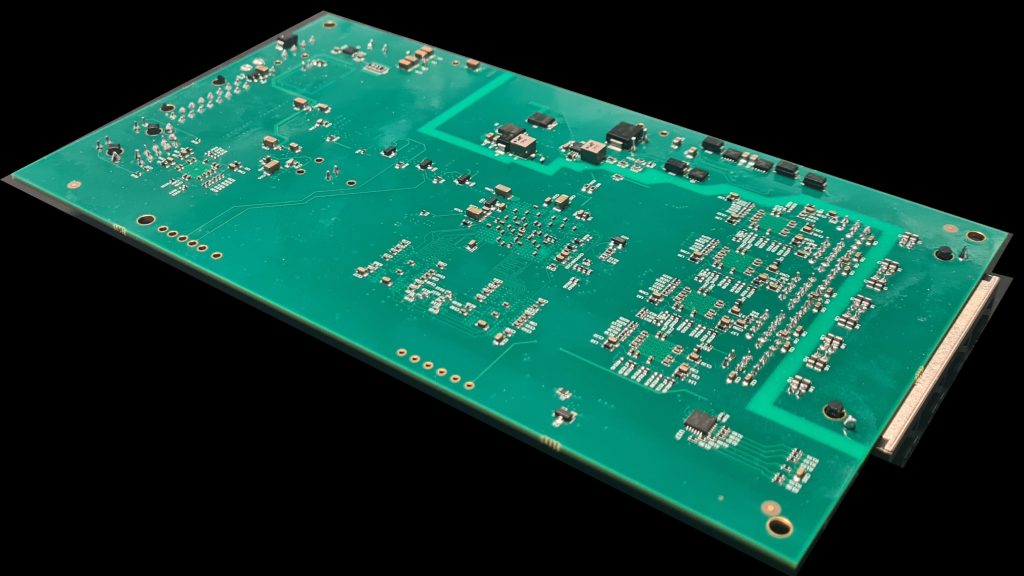
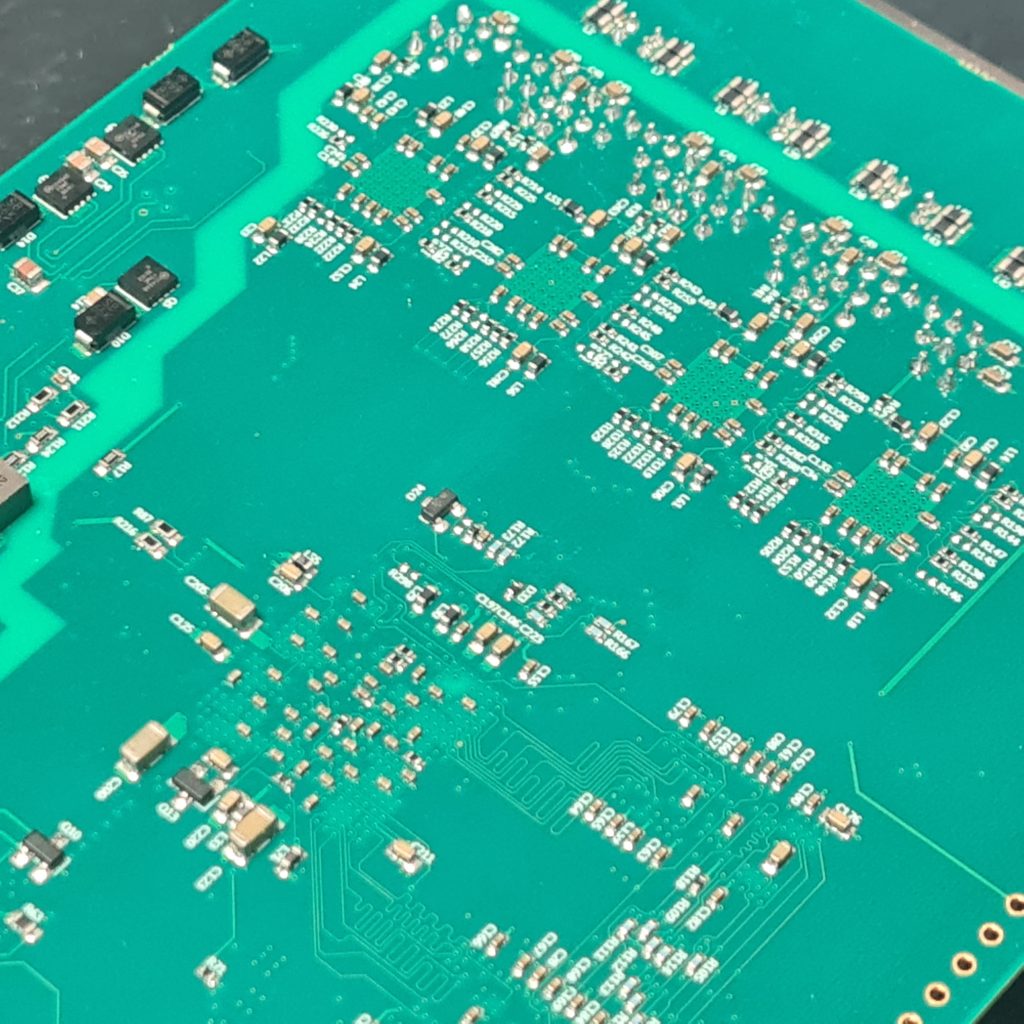
Surface mount components were mounted on the top and bottom of the board. The image below shows the finished bottom side of the board.
The boards were panelised in groups of three. A production run of 60 boards therefore comprised 20 panels, with each panel undergoing separate bottom-side and top-side reflow cycles — 40 reflow cycles in total.
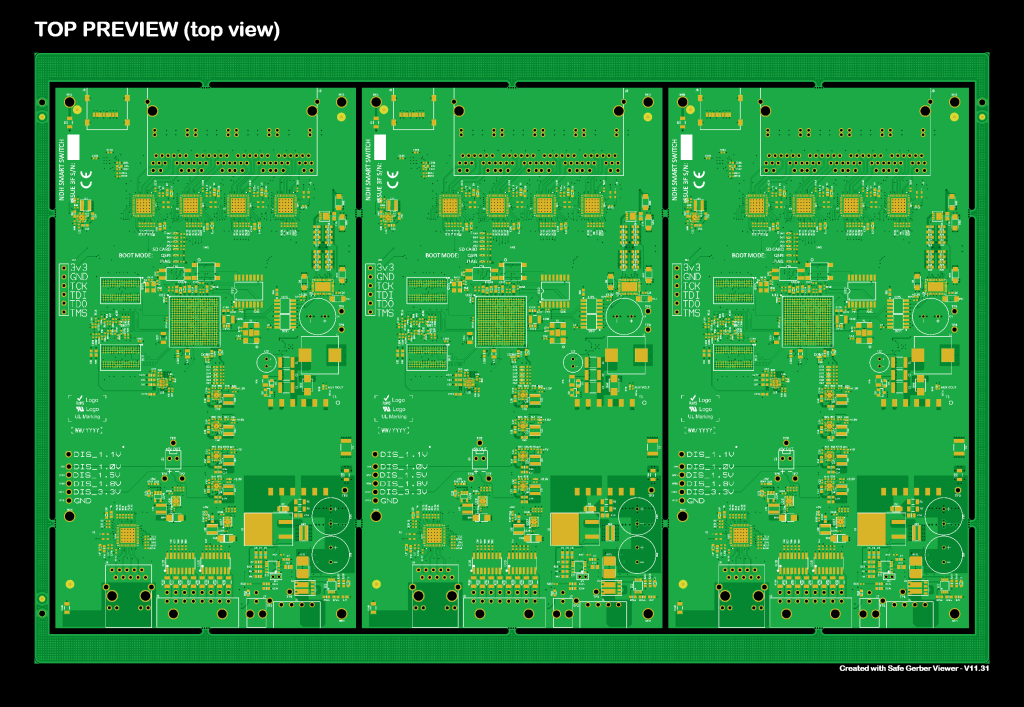
The bottom-side was assembled and inspected first, with any tombstones or other component problems addressed before proceeding to the top-side assembly. Following the second reflow process, the boards were inspected again for any similar defects. They were then separated from their panels and passed to the team responsible for fitting and hand soldering the remaining components.
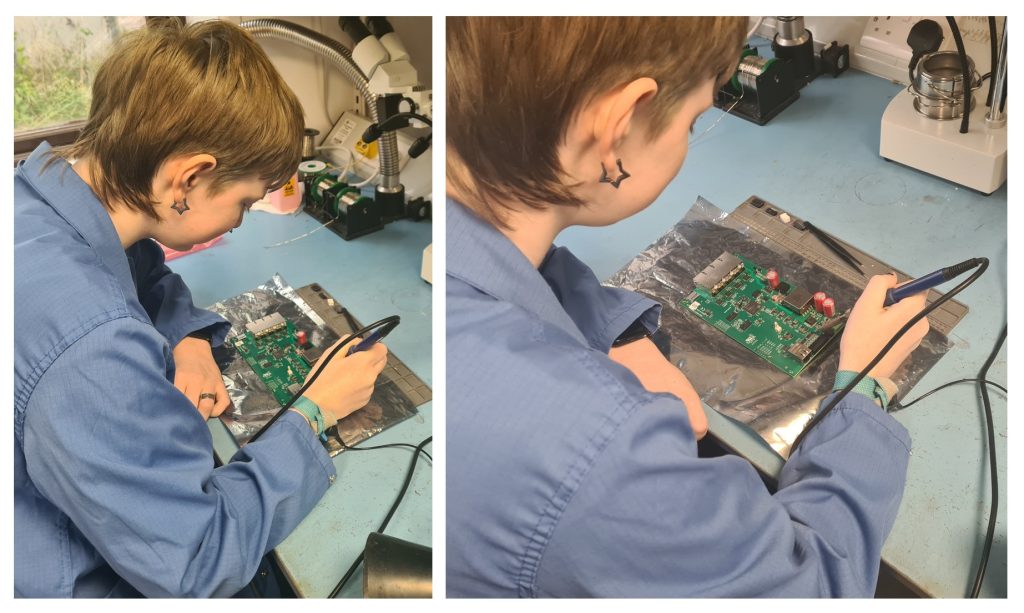
The design also incorporates a number of through-hole connectors, including the quad-Ethernet connector, which required hand soldering following the reflow process. Final assembly was therefore a team effort, with Ava shown below hand soldering one of the boards.
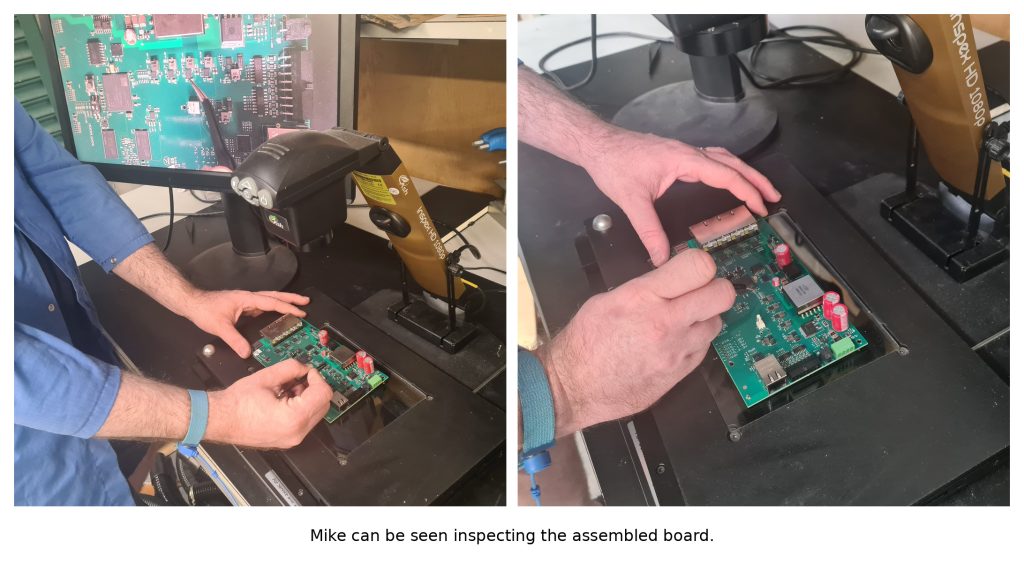
Following assembly, Mike can be seen below using a digital inspection system to examine the completed board for soldering or assembly defects.
PCB Testing and Programming
Once the boards were fully assembled they were delivered to the technician responsible for testing and programming the cards. All supply voltages were measured and recorded, together with the current consumption at defined stages of the test procedure, in accordance with Richard's test instructions.
Before power was applied, the power rails were checked for short circuits. Following initial power-up, the supply voltages and current consumption were measured and recorded.
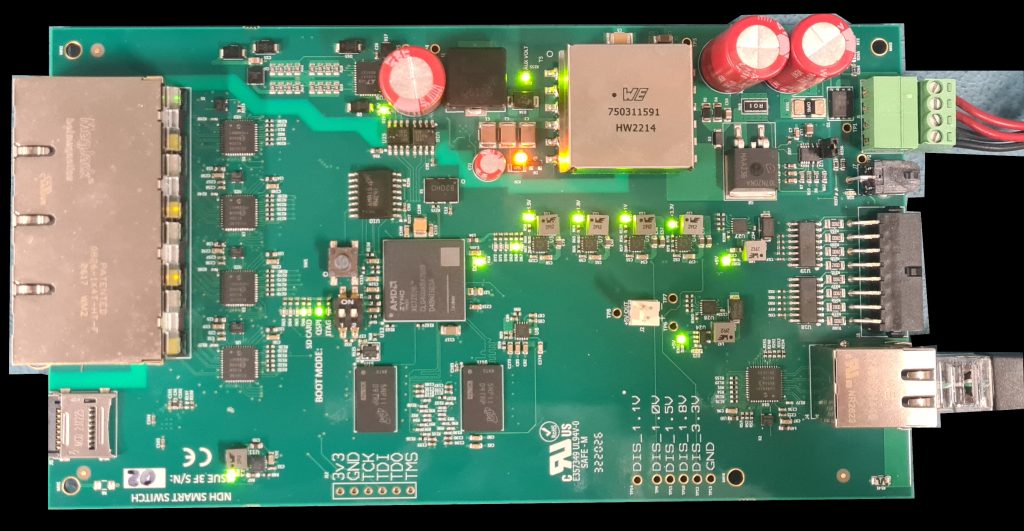
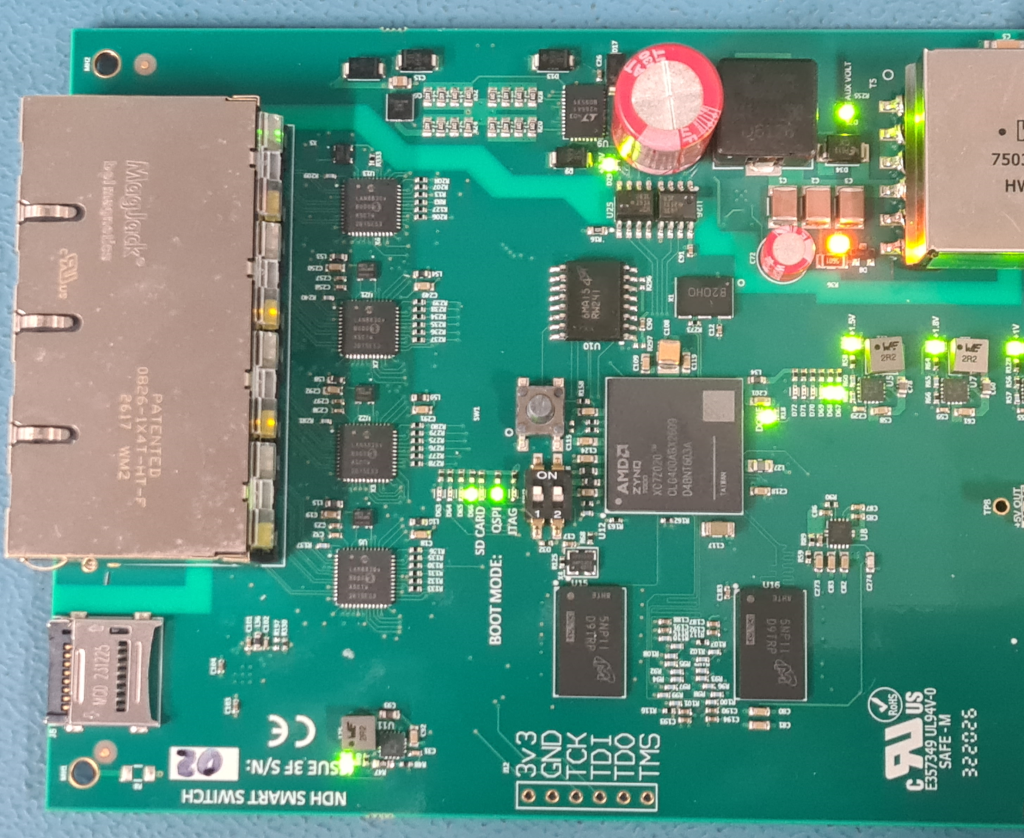
Programming began using an SD card containing the bootloader required to configure the device. The application files were subsequently transferred from a PC over the Ethernet interface using PuTTY. On-board LEDs provided visual indication of the main PSU, PoE and firmware status.
The image below shows one of the boards after configuration.
Preparing the cards for delivery
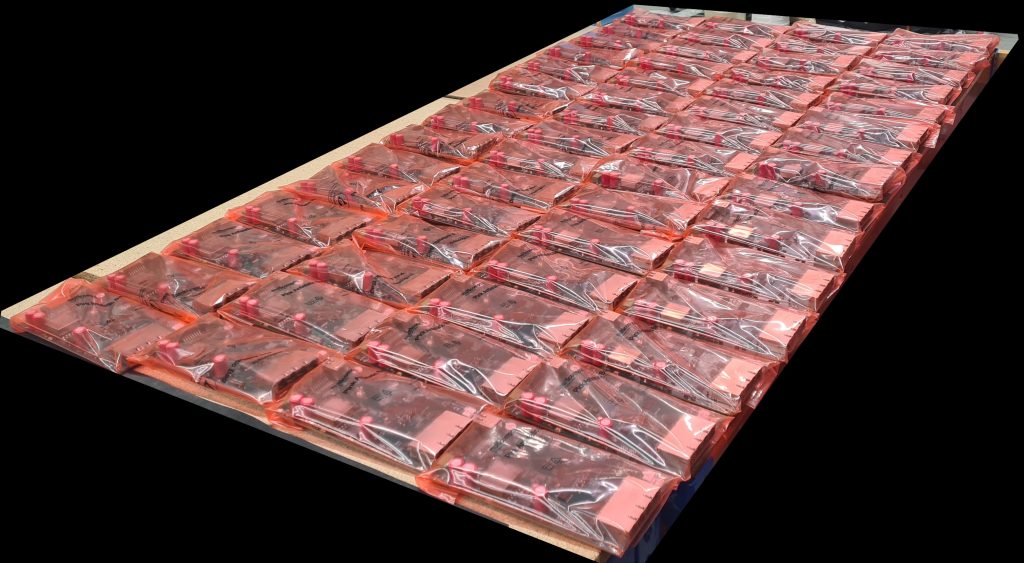
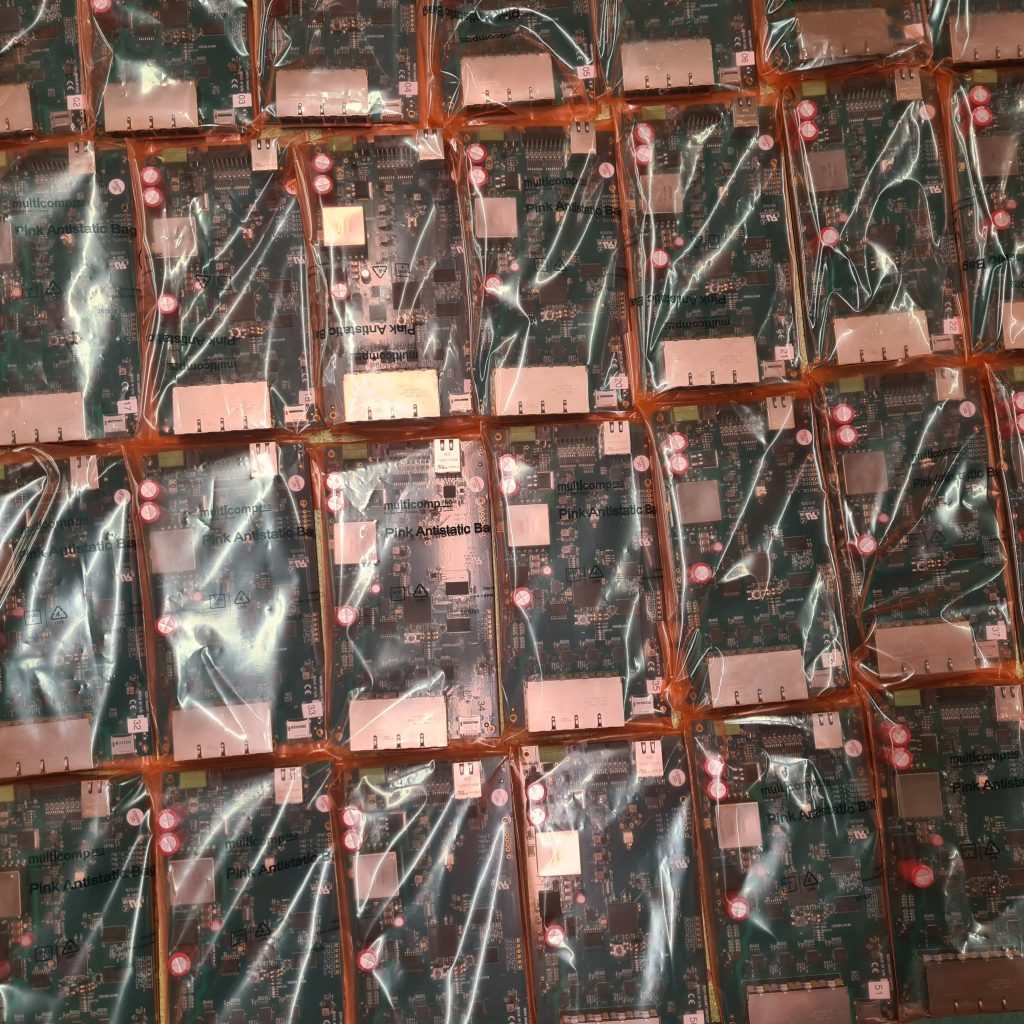
Following assembly, inspection, programming and initial functional testing at Chromatec, all 60 SmartSwitch boards were individually packed in antistatic bags ready for delivery to Northern Design House, where they will undergo final system testing before shipment to end users.
Wrap-up
Chromatec was delighted to be able to support Northern Design House with its latest batch of SmartSwitch boards. This production run demonstrates how Chromatec can support specialist electronics companies through the complete manufacturing process — from component procurement and PCB assembly through inspection, programming and production testing. Working closely with Northern Design House enabled the 60-board SmartSwitch batch to progress from assembled PCBs to tested and programmed units ready for final system verification.